 Latchly
The First 14 Days of Breastfeeding: What to Expect Day by Day
The first 14 days of breastfeeding are the hardest stretch you’ll face as a new mom, and nobody prepares you for how intense they actually are. This guide breaks down exactly what happens day by day, from your first colostrum feed in the delivery room to the moment your milk comes in and everything that follows. You’ll learn what’s normal, what’s not, and the exact signs that tell you things are going well. If you’re in the middle of it right now, reading this at 3am with a baby on your chest, you’re doing better than you think.
First, the part that nobody puts in the brochure. You thought breastfeeding would be instinct. Baby comes out, latches on, milk flows. Instead, it’s day 3, your nipples are on fire, the baby won’t stop crying, your milk isn’t “in” yet, and your mother-in-law just said “maybe you should try formula.” You’re not failing. You’re learning. And so is your baby.

What Happens in the First 14 Days
Your body goes through three distinct phases in these two weeks: colostrum, transitional milk, and the beginnings of mature milk. Your baby goes through their own version, moving from sleepy newborn who barely wakes up to an alert, hungry little person who knows exactly how to tell you they want to eat.
Understanding the timeline takes a massive amount of anxiety off the table. When you know that day 3 is supposed to be hard, day 3 feels survivable instead of like a sign that everything is broken.
Days 1 to 2: Colostrum and Skin-to-Skin
Your body starts producing colostrum weeks before birth. It’s thick, golden, and comes in tiny amounts. That’s by design. Your baby’s stomach on day 1 is the size of a cherry. They need teaspoons, not ounces.
Try to breastfeed within the first hour after birth. Skin-to-skin contact right after delivery helps your baby find the breast using their natural reflexes. Not every birth allows this, and that’s okay. If you had a C-section or your baby went to the NICU, you’ll catch up.
What to expect in these first 48 hours:
- Your baby will be sleepy. Really sleepy. You may need to undress them, change their diaper, or tickle their feet just to wake them up for feeds.
- Feed at least 8 times in 24 hours. Even if baby only latches for a few minutes. Every session tells your body to start building supply.
- You’ll see 1 to 2 wet diapers on day 1, and 2 to 3 on day 2. That’s normal. The volume goes up once your milk transitions.
- Stools will be dark and tarry (meconium). This is your baby clearing out what built up in the womb.
Don’t panic about the small amounts. Colostrum is packed with antibodies, immune factors, and exactly the nutrition your newborn needs. It coats their digestive tract and protects against infection. A few drops per feed is doing serious work.
Days 3 to 5: Your Milk Comes In
This is the hardest stretch for most moms. Your milk starts transitioning from colostrum to transitional milk somewhere between day 2 and day 5. First-time moms tend to be closer to day 4 or 5.
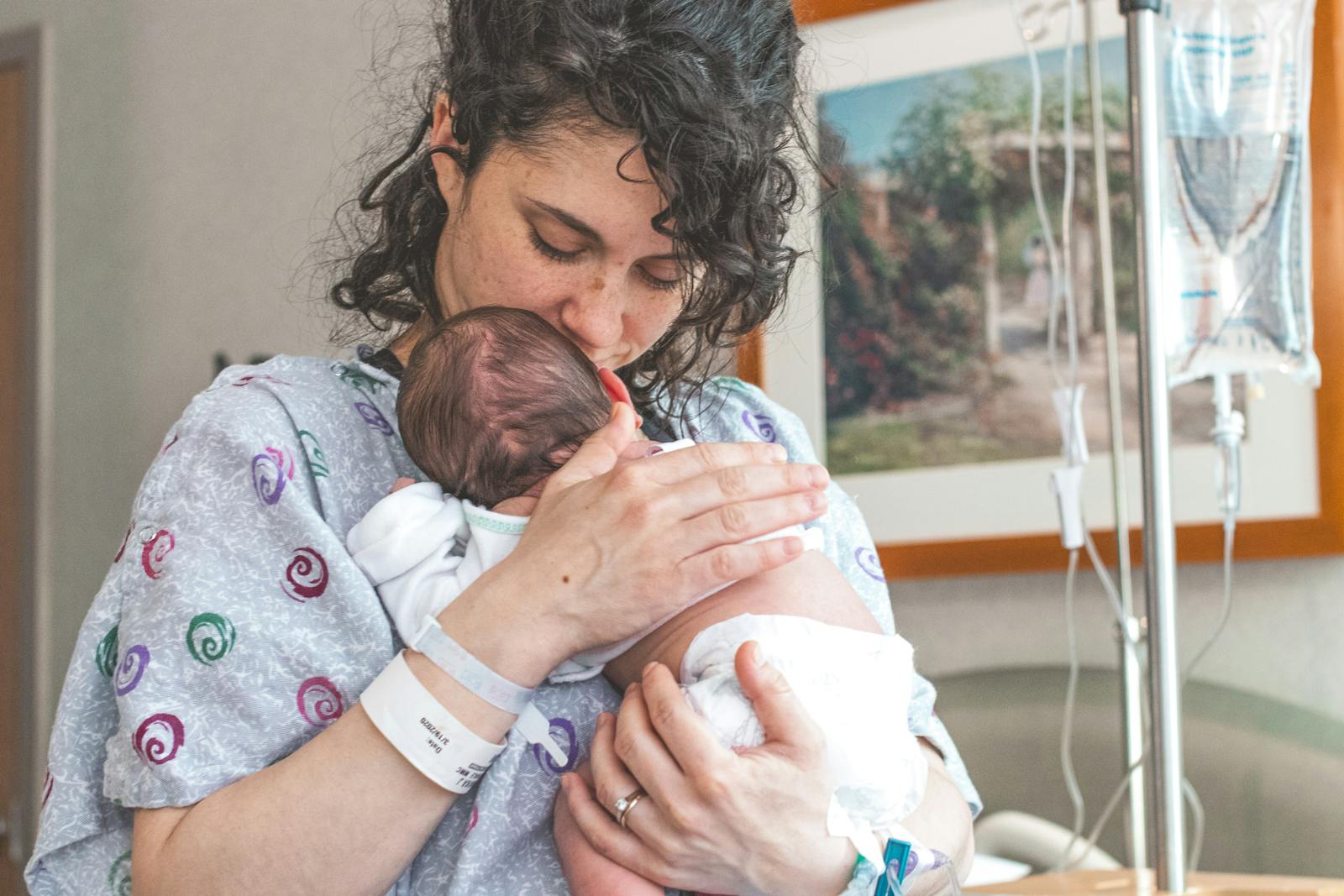
You’ll know it’s happening because:
- Your breasts get noticeably fuller, heavier, and warmer. Some moms wake up and feel like they went up two cup sizes overnight.
- Engorgement is common. Your body overshoots at first, making more milk than baby needs. This usually settles within 24 to 48 hours.
- Baby starts having more wet diapers. You should see 3 to 4 wet diapers on day 3, climbing toward 6 or more by day 5.
- Stools shift from dark meconium to greenish-brown, then to yellow and seedy. That yellow color means your milk is doing its job.
Day 3 is also when a lot of moms hit a wall. Hormones crash. Sleep deprivation stacks up. Nipple soreness peaks. Your baby might cluster feed all evening, nursing nonstop for 2 to 3 hours straight. This is normal. It’s your baby telling your body to make more milk. It’s not a sign that you don’t have enough.
If your milk hasn’t come in by day 5, don’t wait. Call your OB or a lactation consultant. Delayed onset can happen with C-sections, retained placenta, or hormonal issues, and early intervention makes a real difference.
Days 5 to 7: Finding a Rhythm
By day 5, the chaos starts to organize itself. Your baby is more alert, latching with more purpose, and feeding sessions get a little more predictable.
Here’s what to watch for:
- 6 or more wet diapers per day. This is the number your pediatrician will ask about. Clear or pale yellow urine means your baby is well hydrated.
- 3 to 4 yellow, seedy stools per day. Some breastfed babies go more often than that, especially after feeds.
- Weight stabilizes or starts climbing. Most babies hit their lowest weight around day 3 to 5, then start gaining.
- Feeding sessions settle into 15 to 30 minutes per breast. Some babies are efficient and finish in 10. Others take 40. Both can be fine.
- You can hear swallowing. A rhythmic suck-suck-swallow pattern means your baby is actively transferring milk, not just comfort sucking.
This is a good week to focus on your latch. A deep latch in week 1 prevents a world of pain in weeks 2 through 6. If latching still hurts past the first 10 seconds of a feed, something needs to change.
Days 7 to 10: The First Growth Spurt
Your baby’s first growth spurt typically hits between day 7 and day 14. You’ll notice it because suddenly, a baby who was starting to settle into a pattern goes right back to nonstop feeding.
This is cluster feeding, and it’s completely normal. Your baby may want to nurse every 30 to 60 minutes for a few hours, usually in the evening. They’re placing an order for tomorrow’s milk supply. It feels like a step backward, but it’s actually a sign that your baby knows exactly what they’re doing.
During the growth spurt:
- Don’t supplement with formula unless your pediatrician says to. Skipping breast feeds during a growth spurt can actually reduce your supply at the moment when your baby is trying to increase it.
- Stay hydrated. Keep a water bottle at every spot where you nurse.
- Eat real meals. You need roughly 500 extra calories a day while breastfeeding. This is not the time to skip lunch.
- Accept help. Let someone else handle dishes, laundry, and older kids while you park on the couch and feed.
The growth spurt usually resolves in 2 to 3 days. Your supply adjusts, your baby calms down, and feeds space out again.

Days 10 to 14: Turning the Corner
By day 10, most babies are gaining weight. Your pediatrician will check weight at the 2-week visit, and the goal is to be back to birth weight by day 10 to 14. Most breastfed babies gain 5 to 7 ounces per week once your milk is fully established.
Things that should feel different by now:
- Latching gets easier. Your baby’s mouth is bigger. Your technique is better. The two of you are learning each other.
- Nipple pain fades. If you had early soreness, it should be improving by the end of week 2. Persistent pain means something needs fixing. Don’t tough it out.
- Feeds get faster. What took 45 minutes on day 3 might take 20 minutes by day 12. Your baby is getting more efficient at extracting milk.
- You start recognizing hunger cues. Rooting, lip smacking, hand-to-mouth. You’ll catch the early signs before baby gets to full-blown crying.
- Night feeds are still happening. Every 2 to 3 hours at night is normal for a 2-week-old. This isn’t a sleep problem. It’s a tiny stomach that empties fast.
When to Call Your Pediatrician
Not every hard day is a crisis, but some signs need real attention. Call right away if you see any of these:
- Your baby has fewer than 6 wet diapers per day after day 5
- No yellow stools by day 5 (still passing dark or green stools only)
- Baby is too sleepy to feed and you can’t wake them for meals
- Visible jaundice (yellow skin or eyes) that’s getting worse, not better
- Your baby hasn’t regained birth weight by the 2-week visit
- Fever over 100.4°F (38°C) in a newborn under 2 weeks
- Feeding is still painful, with cracked or bleeding nipples, after the first week
If something feels off, trust that feeling. Calling your pediatrician with a question you think might be silly is always the right move. That’s what they’re there for.
The Thing I Wish I’d Known
The first 14 days are not a preview of the next 14 months. They’re the boot camp. The hardest, steepest, most sleep-deprived stretch. And they end.

By week 3, most moms say breastfeeding starts feeling less like a battle and more like something they can actually do. By month 2, it starts feeling normal. By month 3, a lot of moms say they genuinely enjoy it.
You don’t have to love it right now. You just have to get through today’s feeds. Tomorrow you’ll know a little more. Your baby will latch a little better. And the whole thing will feel one notch closer to clicking.
If you need help, ask for it. An IBCLC (board-certified lactation consultant) can change your entire experience in a single visit. Most insurance covers it. The first 2 weeks are when that help matters most.
You’re doing this. And you’re doing it well.